
|
| Our subscribers' grade-level estimate for this page: 3rd - 5th |
| Answers | Label the Airplane in English |
More English Labeling Activities |
|
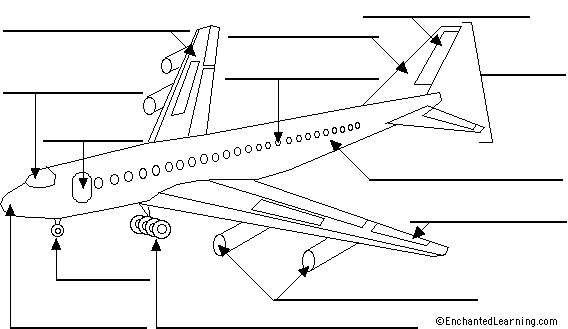
aileron - the hinged surfaces of the trailing edge of a wing (far from the body of the plane) that move up and down in order to roll the plane from side to side. cockpit - where the pilots fly the plane, located at the front of the plane. door - allows people to enter and exit the plane. fin - the vertical part of the rear of the tail. The rudder is located on the trailing edge of the fin. fuselage - the body of the airplane (excluding the wing and tail). Passengers and cargo are carried towards the rear of the fuselage. jet engines - the part of the aircraft that provides the power for the flight. landing gear - the retractible wheels fastened to the main part of the body (by struts) - it is used for landing and moving the plane around on the ground. nose - the forward part of the plane. nosewheel - the part of the landing gear located under the nose of the plane. rudder - the vertical part of the tail; it can move left/right to stabilize the airplane during takeoffs and landings in strong wind or in crosswinds (it controls yaw). tail - the rear section of the plane, consisting of horizontal and vertical (fin) components. windows - sealed viewing portals, located along the sides of the plane. wing - the airplane's two wings produce lift as the plane moves through the air. The wings have four moveable controls: ailerons, flaps, slats, and spoilers. |
| Search the Enchanted Learning website for: |