
|
| You might also like: | Massospondylus Fact Sheet | Karakul Sheep Printout | Fossa Printout | Loris Printout | Pronghorn Printout | Today's featured page: Art Activities and Projects for Students |
| EnchantedLearning.com More Mammal Printouts |
Animal Printouts Label Me! Printouts |
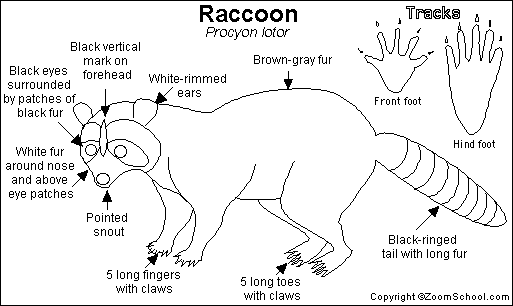
Anatomy: Raccoons have distinctive black patches around their eyes that look like a mask. They have a bushy, black-ringed tail, clawed feet, and a pointed snout. They have long fingers and toes and an acute sense of touch. Newborn raccoons do not have black eye patches or a ringed tail; these develop after a few days. Raccoons grow to be about 18 to 26 inches (46-66 cm) long plus a striped, furry tail 9 to 12 inches (23-30 cm) long.
Diet: Raccoons are omnivores; they will eat almost anything, including frogs, crayfish, birds, mice (and other small mammals), fruit, nuts, plants, crops, and garbage. Raccoons find much of their food in water. Adult raccoons have few natural enemies; young raccoons can be eaten by wolves and bobcats.
| Search the Enchanted Learning website for: |