
|
| You might also like: | Javelina (Collared Peccary) Printout | Nutria Printout | Dingo Printout | Anteater Printout | Red-Tailed Hawk Printout | Today's featured page: Telling Time - Fractions of an Hour |
| All About Birds | EnchantedLearning.com Vulture |
Animal Printouts Label Me! Printouts |
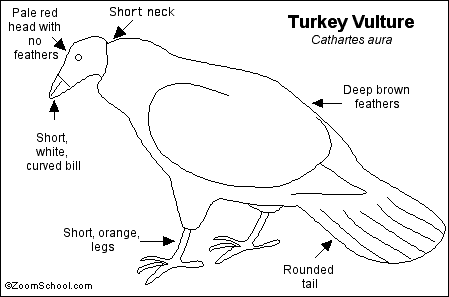
Vultures are divided into two groups: Old World vultures (family Accipitridae, 15 species) and New World (American) vultures (the voiceless, hissing family Cathartidae, 6 species, including the California Condor and the Turkey Vulture).
Flying: These raptors have broad, strong wings and are powerful flyers who have the slowest wingbeat of any bird, at 1 wingbeat per second. They can fly up to 43 mph (69 km/hour). The Ruppell's vulture is the highest flying bird; one hit a jet at an altitude of 37,000 feet (11,278 m) in 1973.
Anatomy: The largest vultures (the Cinereous Vulture) are up to 3 feet (0.9 m) long with a wingspan of up to 9.5 feet (2.9 m); they weigh up to 18 pounds (8 kg). Vultures have hooked bills which they use to tear flesh. Males and females are similar in size and coloration. Most have dark plumage, a short neck, weak feet, and a naked (featherless or covered with only down) head and neck.
Diet: The vulture is a scavenger; it eats dead or weakened animals. Vultures have strong gastric juices; some vultures can even digest bones. Some vultures locate their food using an acute sense of smell, others use keen eyesight.
Eggs and Nests: The vulture's nest is a simple cavity, often located on a cliff or high in a tree. Females lay a very small number of eggs (usually one or two) in each clutch (a set of eggs laid at one time). Vulture eggs hatch after a long incubation period. If food is scarce after the eggs hatch, the larger chick may kill its smaller, weaker sibling.
| Search the Enchanted Learning website for: |